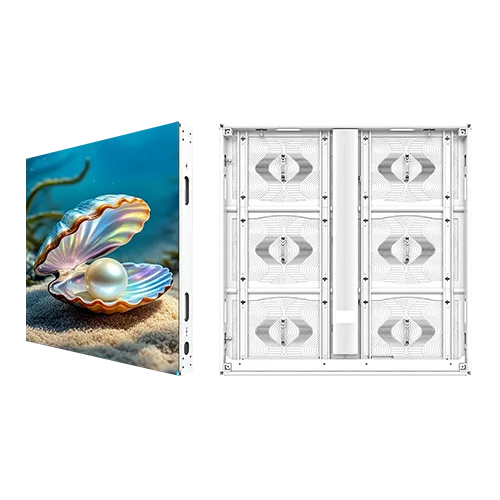
If you have ever shopped for an LED display, you have almost certainly seen the “100,000-hour lifespan” claim. It appears on spec sheets, manufacturer websites, and marketing materials with remarkable consistency. But what does that number actually mean in practice? Will your COB screen really last over eleven years of continuous operation? And more importantly, what factors determine whether you will actually get anywhere near that figure?
The short answer is that 100,000 hours is a real engineering benchmark. It is not a guarantee that your display will stop working at that point. Understanding what this number represents, how it is measured, and what you can do to protect your investment is essential for anyone making a procurement decision.
This guide breaks down the technical definitions, key metrics, influencing factors, and practical maintenance strategies that determine how long your COB LED display will truly last.
What Is the Average Lifespan of a COB LED Display?
The industry-standard rated lifespan for a COB LED display is 100,000 hours. However, this does not mean the display stops working at that point. Instead, 100,000 hours represents the time until the display’s brightness degrades to a specified percentage of its initial output, typically 70% (known as L70).
To put this into perspective, 100,000 hours equals over 11 years of 24/7 operation. Under more typical usage patterns, say 8 hours per day, 5 days per week, that same figure extends to roughly 24 to 48 years.
In real-world indoor environments, most COB displays deliver 7 to 10 years of service before noticeable brightness degradation becomes an issue. The key point is that LED chips rarely fail completely; they fade gradually over time. This gradual decline means you will not wake up one morning to find your screen completely dead. Instead, you will observe a slow, incremental reduction in brightness and colour vibrancy. This process gives you ample time to plan for replacement or maintenance.
What Are the Key Lifespan Metrics for COB LED Displays?
To properly evaluate lifespan claims, you need to understand two critical industry standards: L-rating and B-rating. These metrics provide the technical foundation for comparing different products and manufacturers.
L-Rating (L70, L80, L90)
The L-rating defines the time until an LED’s light output drops to a certain percentage of its initial brightness. L70, for example, means the time until brightness falls to 70% of its original level. Most COB displays are rated at L70 for 100,000 hours, meaning they retain at least 70% of their initial brightness after that duration.
Higher L-ratings for the same hour figure indicate better quality. An L90 rating of 100,000 hours is more demanding than L70. It means the display maintains 90% of its brightness for the full duration.
B-Rating (B10)
The B-rating is a reliability metric. B10 means that at the specified hour mark, no more than 10% of the LEDs in the population will have failed.
When combined, the L90B10 standard is particularly rigorous. After 100,000 hours, 90% of the LEDs must maintain at least 90% of their initial brightness. This is the gold standard for premium COB displays and provides genuine peace of mind for mission-critical installations.
Calculating Real-World Life Expectancy
To translate these laboratory metrics into practical expectations, consider your daily operating hours. A display running 24/7 will reach 100,000 hours in about 11.4 years. The same display running 12 hours per day will last approximately 22.8 years. For a typical corporate environment running 8-hour days, you are looking at over 34 years.
How Does COB Technology Achieve Such a Long Lifespan?
COB’s extended lifespan is not accidental. It stems from three fundamental design advantages that directly address the primary causes of LED degradation: heat, physical vulnerability, and material quality.
Superior Thermal Management
Heat is the number one enemy of LEDs. Every 10°C increase in junction temperature roughly halves the expected lifespan of an LED chip. COB technology addresses this directly.
In a COB display, LED chips are mounted directly onto the PCB substrate without individual packaging. This creates a short, direct thermal path from the chip to the board and then to the cabinet rear. There is no air gap to trap heat. The result is significantly lower operating temperatures. COB’s thermal resistance typically ranges from 1.2 to 2.5°C per watt, compared to 5 to 8°C per watt for SMD. This means COB can keep junction temperatures below 85°C under normal operation, while an equivalent SMD solution may exceed 110°C.
Flip-chip COB designs take this further by eliminating wire bonds. This not only improves thermal performance but also removes a common point of failure.
Integrated and Robust Structure
COB’s sealed construction eliminates exposed solder joints and wire bonds. The entire chip array is covered by a continuous layer of epoxy resin. This creates a smooth, non-reflective surface that is resistant to dust, moisture, and physical impact.
The integrated structure of COB displays delivers failure rates as low as 5 PPM per year, compared to 50 to 100 PPM for standard SMD displays. In practical terms, a COB screen is roughly 10 to 20 times less likely to experience a component failure than an equivalent SMD screen.
Advanced Materials and Manufacturing
Premium COB displays use high-quality LED chips from leading manufacturers, mounted on PCBs with low thermal resistance. Precision encapsulation processes ensure uniform protection across the entire array. Material quality and manufacturing precision are not cosmetic considerations. They directly determine whether a display will achieve its rated lifespan or fall short.
What Factors Affect COB LED Lifespan?
Even with COB’s inherent advantages, several factors can significantly shorten or extend the actual service life you experience. Understanding these variables is essential for making informed decisions about installation, operation, and maintenance.
Component Quality
Not all COB displays are created equal. Cheap, substandard LED chips degrade faster than premium alternatives. Inferior PCBs have poorer heat dissipation, which raises operating temperatures and accelerates aging. The difference may not be apparent in the first year or two, but it becomes unmistakable after three to five years of continuous operation.
Heat Accumulation
Inadequate cooling is perhaps the single most common cause of premature LED failure. Every 10°C increase in junction temperature roughly halves the expected lifespan. Poor ventilation, undersized air-conditioning, or installing the display in a location with restricted airflow will all shorten its useful life.
The relationship between temperature and lifespan is exponential, not linear. A display running at 85°C junction temperature may last 50,000 hours, while the same display at 65°C could exceed 100,000 hours.
Environmental Stress
Dust accumulation is a silent killer of LED displays. It traps heat against the surface and attracts moisture, which can lead to corrosion of contacts and circuits. High humidity environments are particularly challenging, as moisture ingress can cause short circuits and accelerate material degradation.
Indoor displays in climate-controlled environments typically achieve their full rated lifespan. Outdoor displays face direct sunlight, temperature extremes, rain, and UV exposure, all of which accelerate degradation.
Improper Usage Patterns
Running a display at 100% brightness 24 hours a day, 7 days a week places maximum stress on the LED chips. Frequent power cycling causes thermal expansion and contraction stress on solder joints and wire bonds. Driving LEDs beyond their rated current generates excess heat that accelerates aging.
Conversely, reducing brightness when full output is not needed significantly extends lifespan. A display running at 70% brightness can last substantially longer than one running at 100%, with minimal perceptible difference in most indoor environments.
Burnout Symptoms to Watch For
Early signs of degradation include:
-
Gradual brightness reduction across the screen
-
Colour shift or inconsistent colour temperature
-
Individual dead or dim pixels
-
Flickering or unstable operation
Catching these symptoms early allows for preventive maintenance before they escalate into more serious failures.
How to Extend the Life of COB LED Screens (Best Practices)
While COB displays are inherently durable, following these best practices will help you maximise their service life.
-
Use a stable, regulated power supply with surge protection. Power fluctuations are a leading cause of premature component failure. Investing in quality power conditioning is cheap insurance for an expensive display.
-
Schedule rest periods. Avoid 24/7 continuous operation whenever possible. Even a few hours of downtime per day reduces cumulative thermal stress and extends lifespan.
-
Adjust brightness based on ambient light conditions. Running at full brightness when it is not needed wastes energy and accelerates aging. Reducing brightness from 100% to 70% may extend LED lifespan without perceptible difference in most indoor environments. Use automatic brightness sensors or schedule manual adjustments to match the environment.
-
Clean the screen surface regularly. Use a soft, lint-free cloth to remove dust and debris. Do not use abrasive materials or harsh chemicals that could damage the protective epoxy coating.
-
Control environmental temperature and humidity. Maintain ambient temperature at or below 25°C and relative humidity between 40% and 60% for optimal performance and longevity.
-
Perform regular inspections. Check for loose connections, physical damage, or signs of moisture ingress. Early detection of issues prevents minor problems from becoming major failures.
Does Fine-Pitch COB Have a Shorter Lifespan Than Standard COB?
Fine-pitch COB displays, those with pixel pitches of P0.9 and below, present a unique thermal challenge. Higher pixel density means more LED chips packed into the same surface area, which generates more heat per unit area. Thermal management becomes more demanding at finer pitches.
However, the same COB thermal advantages still apply. Direct chip-to-PCB attachment, flip-chip options, and the sealed surface all work to dissipate heat efficiently. With proper cooling design, fine-pitch COB displays can still achieve 80,000 to 100,000 hours of service.
The key difference is that fine-pitch COB installations require more rigorous cooling design than standard-pitch COB displays to maintain the same lifespan. If you are specifying a P0.9 or smaller COB screen, ensure your HVAC and ventilation planning accounts for the higher heat density.
COB LED Screen Lifespan in Outdoor vs Indoor
The environment in which a COB display operates has a dramatic impact on its lifespan.
Indoor COB Displays operate in controlled environments: stable temperature, low humidity, and minimal dust. Under these conditions, COB displays routinely achieve their full rated lifespan of 80,000 to 100,000 hours. Some premium indoor COB products retain 95% of their initial brightness after five years of operation.
Outdoor COB Displays face a far more challenging set of conditions: direct sunlight, temperature extremes ranging from freezing to scorching, rain and high humidity, and UV exposure that degrades materials over time. As a result, outdoor COB displays typically have lower L70 ratings, generally in the 50,000 to 70,000 hour range. For outdoor applications, look for COB displays with IP65 or higher ratings to ensure protection against rain and dust ingress.
That said, COB’s sealed surface makes it significantly more resistant to outdoor stresses than exposed SMD technology. For outdoor applications where durability is paramount, COB remains the superior choice. Just be realistic about the reduced lifespan expectations and plan your maintenance and replacement schedule accordingly.
When selecting a COB display for outdoor use, verify the manufacturer’s outdoor-specific lifespan data and ensure the product has an appropriate IP rating for your local climate conditions.
COB vs SMD: Which LED Display Has a Longer Lifespan?
This is the question most buyers ultimately want answered. The data is clear: COB offers a demonstrable lifespan advantage over SMD.
COB’s integrated, wire-free construction makes it virtually immune to the dust, moisture, and physical contact that plague SMD displays. Superior heat dissipation directly contributes to longer operational life. The failure rate differential, 5 PPM versus 50-100 PPM, translates into significantly fewer service calls and less downtime over the life of the display.
For applications requiring maximum reliability over extended periods, COB delivers a clear lifespan advantage. The higher upfront cost is often justified by lower total cost of ownership through reduced maintenance, fewer failures, and longer service life.
Related Article: COB vs SMD Led Display: What’s the Difference
Conclusion
The 100,000-hour lifespan claim for COB LED displays is a valid engineering benchmark, not a marketing gimmick. It is based on industry-standard L70 and B10 metrics that provide a technical foundation for comparing products and making informed procurement decisions.
COB technology achieves extended lifespan through three key advantages: superior thermal management that keeps junction temperatures low, an integrated and robust structure that eliminates common failure points, and high-quality materials that resist degradation over time. The result is a display with failure rates an order of magnitude lower than SMD and L70 ratings that typically reach 80,000 to 100,000 hours.
That said, actual lifespan depends on multiple factors: component quality, thermal management, environmental conditions, usage patterns, and maintenance practices. Fine-pitch COB demands more rigorous cooling. Outdoor COB faces harsher conditions and typically delivers shorter service life than indoor installations. Proper maintenance, regular cleaning, temperature control, and brightness management can help you achieve the full rated lifespan.
For 24/7 mission-critical applications, COB’s longevity edge translates directly into lower total cost of ownership. Fewer failures, less downtime, and longer service life mean your investment continues to deliver value long after an SMD display would require replacement.
Partner With UHLED
UHLED specialises in COB LED display solutions engineered for maximum longevity. Our engineering team can help you select the right product for your specific environment and usage requirements, whether you need a fine-pitch control room display, an outdoor signage solution, or anything in between.
Contact UHLED today for a customised consultation. Tell us about your project, and we will deliver a display solution built to last.