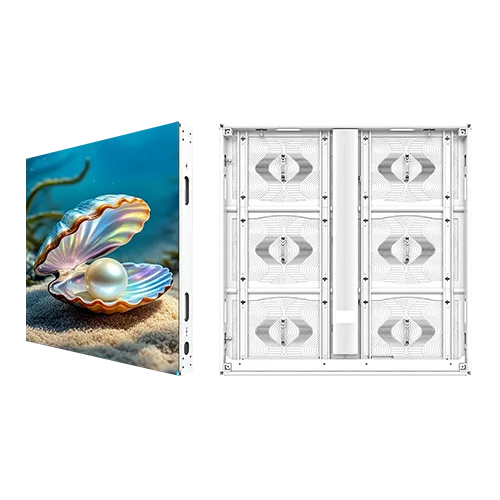
Choosing between SMD and COB LED displays is critical. They use fundamentally different packaging methods. The wrong choice can compromise image quality, raise maintenance costs, or shorten the display’s lifespan.
SMD (Surface‑Mounted Device) is the mature industry standard with broad supply chains. COB (Chip‑on‑Board) is a newer integrated solution gaining traction, especially for fine‑pitch indoor applications. The global COB market was valued at roughly USD 2.35 billion in 2025 and is projected to grow at a CAGR of 6.20%, with some segments exceeding 66% CAGR through 2029 (industry reports).
This guide breaks down technical principles, manufacturing processes, performance metrics, and application scenarios to help you decide.
What is SMD (Surface‑Mounted Device) LED Display?
SMD technology packages each individual LED chip into a discrete lamp component, which is then soldered onto a printed circuit board (PCB) using automated SMT (Surface‑Mount Technology) pick‑and‑place machines.
Think of it as building with Lego bricks. Each lamp is manufactured separately, then placed onto the board one by one. The process involves a bracket (lead frame), conductive wires, epoxy resin, and a reflow soldering step to permanently attach the components.
This modular approach gives SMD a clear practical advantage: failed lamps can be identified and replaced on‑site, which is critical for large installations where downtime is expensive. SMD also supports a wide range of pixel pitches, from large outdoor formats (P10 and above) down to P1.0 and even smaller with micro SMD LEDs.
What is COB (Chip‑on‑Board) LED Display?
COB mounts multiple bare LED chips directly onto the PCB substrate without any individual packaging, and then covers the entire array with a single continuous protective layer of epoxy resin.
If SMD is like Lego bricks, COB is like a seamless concrete slab. There are no raised components on the surface, just a flat, unified panel. The manufacturing process includes direct die attachment, wire bonding, and overall encapsulation. It eliminates the separate lamp packaging and reflow soldering steps, but demands much higher precision and process control.
Because there are no visible borders between individual LEDs, COB displays eliminate the grainy “pixilation” effect that appears on conventional screens when viewed up close. This makes COB the natural choice for ultra‑fine pitches (P0.4 to P0.9), where it is often more cost‑effective than SMD.
SMD vs COB: How Do Their Manufacturing Processes Differ?
SMD manufacturing follows a step‑by‑step assembly of pre‑packaged lamps, while COB integrates bare chips directly onto the board, eliminating several intermediate steps.
SMD process
- LED chip packaging: each chip is encapsulated into a lamp.
- SMT placement: lamps are placed onto the PCB by pick‑and‑place machines.
- Reflow soldering: the board goes through a high‑temperature oven to solder components.
- Testing and aging: modules are powered on and burned in to verify performance.
This process is mature, highly automated, and benefits from economies of scale. However, each additional step introduces potential failure points, and the exposed lamps are vulnerable to impact damage.
COB process
- Direct die attachment: bare chips are placed directly on the PCB.
- Wire bonding: electrical connections are made between chips and the circuit.
- Encapsulation: a single layer of epoxy resin covers and protects the entire chip array.
The COB flow is shorter, but each step is technically demanding. A slight misalignment or bubble in the encapsulation can affect a large area, which historically hurt yield rates. Today, equipment improvements have significantly raised yields, narrowing the cost gap with SMD.
What Are the Key Performance Differences Between COB and SMD?
The key performance differences center on pixel pitch limits, image uniformity, durability, heat dissipation, and repairability. The table below summarises these contrasts at a glance.
| Performance Metric |
SMD LED Display |
COB LED Display |
| Pixel Pitch Range |
P1.0 and above (P0.9 possible but costly) |
P0.4 to P1.5, highly efficient at P0.9 and below |
| Image Uniformity |
Visible graininess at fine pitches due to lamp gaps |
Seamless, no pixilation, smoother appearance |
| Contrast & Colour |
Good, but slight variation between lamps |
Higher contrast, better colour consistency |
| Viewing Angle |
Typically ~140‑160° |
160‑170° horizontal and vertical |
| Impact Resistance |
Moderate; exposed lamps can break on impact |
5‑10 times stronger; continuous surface absorbs shock |
| IP Rating (Dust/Water) |
Usually IP40‑IP54 (gaps trap contaminants) |
IP54‑IP65, sealed surface repels dust and moisture |
| Heat Dissipation |
Higher thermal resistance from individual packages |
Direct chip‑to‑PCB path, lower junction temps (5‑10°C cooler) |
| Power Consumption |
Baseline (100%) – higher at same brightness |
45‑60% less than SMD with flip‑chip designs |
| Maintenance |
On‑site single‑lamp replacement possible |
Module‑level replacement; failures less frequent |
| Upfront Cost |
Lower for pitches >P1.2 |
Higher initially, but gap is narrowing |
Now let’s examine each factor in more detail.
- Pixel pitch and density: SMD becomes difficult and expensive below P1.0, while COB handles P0.4 to P1.5 efficiently and is often the only economical option at P0.9 and below.
- Image quality: COB’s seamless surface delivers smoother images with higher contrast and colour consistency, and achieves 160‑ to 170‑degree viewing angles. SMD can also produce excellent images, but at fine pitches the physical gaps between lamps can cause visible graininess.
- Durability and protection: COB offers 5 to 10 times better impact resistance and can reach IP54‑IP65 ratings against dust and moisture. SMD lamps are exposed and have gaps that trap contaminants, making them more fragile.
- Heat dissipation and power consumption: COB’s direct chip‑to‑PCB attachment shortens the thermal path; flip‑chip designs can lower junction temperatures by 5‑10°C and reduce power consumption by 45‑60% compared to SMD at the same brightness.
- Maintenance: SMD supports on‑site single‑lamp replacement, which is flexible. COB failures typically require module or panel return to the factory, but COB’s much lower failure rate often means less overall downtime in continuous‑operation environments.
What Are the Pros and Cons of SMD and COB LED Displays?
COB excels in image quality, durability, and energy efficiency, but comes with higher upfront costs and harder repairs. SMD offers lower initial cost, mature supply chains, and on‑site repairability, but struggles at fine pitches and is more fragile.
COB advantages:
- No pixilation at fine pitches, smooth and uniform image.
- High impact resistance, suitable for high‑traffic areas.
- Better dust and moisture protection.
- Superior heat dissipation, longer lifespan.
- Up to 60% lower power consumption than SMD.
SMD advantages:
- Mature technology with global supply chains and fast delivery.
- Lower procurement cost, especially for pitches above P1.2.
- Wide pitch range from P10 down to P1.0.
- Individual lamps can be replaced on site, reducing spare part pressure.
Limitations: SMD becomes expensive and fragile at micro pitches; the gaps between lamps collect dust and can cause colour drift. COB requires a higher capital investment and module‑level replacements are costlier than single‑lamp repairs.
SMD or COB: Which One Suits Your Application Best?
Choose SMD when budget is tight or you need outdoor/rental solutions; choose COB when you require ultra‑fine pitch, premium image quality, or long‑term reliability.
Choose SMD if:
- Your budget is limited and pixel pitch is above P1.2.
- You need on‑site, component‑level repairs.
- The application is outdoor signage, rental stages, or sports venues where high brightness and weather resistance are proven.
- You cover large areas that do not demand extreme density.
Choose COB if:
- Viewers sit close to the screen (control rooms, boardrooms, front rows).
- You need pixel pitch P0.9 or smaller.
- The screen is exposed to physical contact or high traffic.
- Continuous operation is required and frequent maintenance is unacceptable.
- Energy efficiency and low heat output are priorities for reducing operational costs.
What Does the Future Hold for SMD and COB Technologies?
COB is rapidly gaining market share, with projections showing it and COG (Chip‑on‑Glass) accounting for nearly 57% of the display market by 2029, while SMD’s share will drop from over 92% in 2024 (industry data).
In 2024, packaged LEDs (mostly SMD) still dominated shipments at over 92%, but that share is expected to more than halve by 2029. The COB market is forecast to grow at a CAGR of over 66% from 2024 to 2029, reaching USD 5.1 billion. In the P1.4 and below segment, COB penetration already hit 85.5% in Q3 2025, up 34.4 percentage points year‑on‑year.
The main driver is falling costs: average COB product prices dropped 31.4% in 2025 and are expected to fall another 30% by mid‑2026. At the same time, applications are expanding from high‑end command centres and virtual production studios to education, corporate meetings, and even home cinema.
SMD is not disappearing. It remains the leading technology for outdoor signage, rental, and general‑purpose displays above P2.0, where brightness and cost‑effectiveness are paramount. The two technologies will coexist: SMD for scale and versatility, COB for premium visual quality and durability.
Conclusion
Choosing between SMD and COB is not about which is “better” in absolute terms; it is about matching technology to your specific project needs. SMD offers low entry cost, easy repair, and broad applicability, making it a safe choice for outdoor and conventional indoor screens. COB delivers superior image quality, rugged durability, and energy savings, ideal for control rooms, luxury retail, and premium meeting spaces.
UHLED specialises in helping clients select and integrate SMD and COB Screen. Our engineering team provides end‑to‑end support, from site assessment and system design to installation and ongoing maintenance. We do not just sell screens; we design solutions that match your performance requirements, budget, and application environment.
Contact UHLED today for a customised quote. Tell us about your project and we will deliver a display solution that exceeds your expectations.
Frequently Asked Questions
Q1: What is the actual price gap per square metre between SMD and COB at the same pitch (e.g., P1.2) today?
The price gap is 20% to 30% (COB being the higher cost).
Q2: Do COB and SMD displays require different ventilation or air‑conditioning setups when installed in a control room?
COB requires less aggressive cooling than SMD. Its flip‑chip design lowers surface temperature by 5‑10°C and power draw by 10‑20%. The sealed surface eliminates front ventilation, but both still need ≥200 mm rear clearance. No special HVAC class is required.
Q3: Are there any differences in weight, thickness, or structural load requirements between SMD and COB panels?
Yes, COB panels are lighter and thinner than SMD panels. COB cabinets measure 25‑35 mm thick (vs 35‑45 mm) and weigh about 25‑30% less per square metre.
Q4: In a venue with large glass windows, which technology handles ambient light and glare better without sacrificing contrast?
COB handles ambient light and glare better than SMD. Its matte surface reflects <3% of light, while SMD’s glossy domes reflect 5‑8% and scatter glare. COB contrast ranges from 5,000:1 to 25,000:1 (vs SMD’s 3,000:1‑5,000:1) and COB accepts anti‑glare coatings impractical on SMD. At 800 nits in sunlight, COB delivers better perceived quality than SMD at 1,200 nits because blacks stay deep.
Q5. Do SMD and COB products differ significantly in safety certifications (CE, FCC, ETL, RoHS) or fire‑retardant ratings (UL94)?
No, they do not differ significantly. Both fall under the same regulatory standards for safety (CE, FCC, ETL, RoHS) and fire retardancy (UL94).
Q6: For the same resolution, does a COB screen require a more powerful video processor or controller than an SMD screen?
No, a COB screen does not require a more powerful processor than an SMD screen for the same resolution. Processor demand depends on total pixel count and refresh rate, not packaging technology. However, COB is often used at finer pitches, increasing total pixels for the same physical size – that may require a stronger processor. Both use standard controllers (NovaStar, Colorlight, etc.).
Q7: If we install SMD now, can we later upgrade individual modules to COB without replacing the entire cabinet structure?
No, SMD and COB modules are not interchangeable within the same cabinet. To upgrade, replace entire cabinets while keeping the mounting structure and cabling; this costs about 60‑70% of a new installation and can be done in one day for a typical wall.