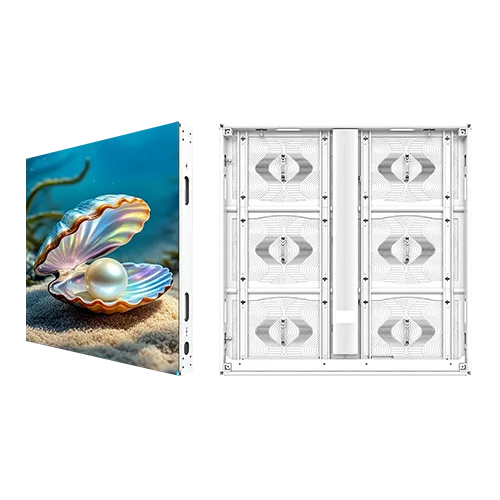
Selecting a fine pitch LED display for your indoor application is a significant investment decision. With pixel pitches now reaching below 1.0mm and COB technology becoming mainstream, the options can seem overwhelming. This comprehensive buying guide breaks down the essential factors to evaluate when sourcing fine pitch COB LED displays for professional applications.
Understanding Pixel Pitch: The Foundation of Image Quality
Pixel pitch — the distance in millimeters between the centers of adjacent pixels — determines both resolution and optimal viewing distance. The general rule: minimum viewing distance (in meters) equals pixel pitch (in mm). A P1.2 display, for example, requires viewers to stand at least 1.2 meters away for pixels to blend into a continuous image.
For fine pitch applications, common options include P0.7, P0.9, P1.2, and P1.5. Smaller pixel pitches deliver higher resolution but at significantly higher cost. The key is matching pixel pitch to your actual viewing distances rather than simply choosing the finest pitch available.
Critical Specifications to Evaluate
1. Refresh Rate and Gray Scale
Refresh rate, measured in Hertz (Hz), indicates how many times per second the display updates its image. For professional applications, demand a minimum 3,840Hz refresh rate. This eliminates scanning lines when the display is captured on camera — essential for broadcast environments and video conferencing. Gray scale performance (typically 14-16 bit) determines how smoothly the display renders subtle color gradients and shadow detail.
2. Color Gamut and Calibration
Professional displays should achieve at least 100% NTSC or 90%+ DCI-P3 color gamut coverage. More importantly, verify that the manufacturer performs individual module calibration at the factory. Without proper calibration, color and brightness variations between modules create visible seams in the finished wall — a defect that cannot be corrected through software.
3. Brightness and Ambient Light Handling
Indoor fine pitch displays typically operate at 600-800 nits brightness. Higher brightness enables visibility in spaces with natural light but increases power consumption and heat generation. Look for displays with automatic brightness sensors that adjust output based on ambient conditions, optimizing both visibility and energy efficiency.
4. Cabinet Design and Installation
Fine pitch cabinets should feature precision-machined mounting systems that ensure perfect alignment without visible gaps. Die-cast aluminum construction offers the best balance of rigidity and weight. Front-service access is essential for installations where rear maintenance space isn’t available. Verify cabinet depth — slimmer profiles (under 60mm) enable more flexible mounting options.
COB vs SMD: Making the Technology Choice
For pixel pitches below P1.2, COB technology offers clear advantages. The direct chip mounting enables finer pitches that would be impossible with SMD packaging. The seamless resin surface provides superior contrast and durability. The improved thermal management ensures consistent performance over the display lifetime.
At P1.5 and above, SMD remains cost-competitive for general applications. However, for mission-critical environments, premium corporate installations, or any application where image quality cannot be compromised, COB is the recommended technology regardless of pixel pitch.
Evaluating Manufacturers: Beyond the Spec Sheet
- Manufacturing Capabilities: Look for ISO-certified facilities with automated SMT and die-attach equipment. Manual assembly cannot achieve the precision required for fine pitch COB production.
- Quality Control: Verify 100% module aging tests (typically 24-72 hours) and comprehensive final inspection protocols.
- Engineering Support: Complex installations require experienced application engineers. Confirm the manufacturer provides design consultation, on-site supervision, and operator training.
- Warranty and Spare Parts: Standard warranty should be 2-3 years with available extensions. Confirm spare parts availability for at least 5 years beyond product discontinuation.
- Reference Installations: Request site visits to operational installations similar to your project. Real-world performance is the ultimate validation.
Total Cost of Ownership Analysis
Initial purchase price represents only a fraction of total ownership cost over a display’s 10+ year lifespan. Factor in energy consumption (COB technology typically uses 20-30% less power than equivalent SMD), maintenance requirements, and potential downtime costs. A higher initial investment in quality often delivers lower total cost of ownership.
Request detailed ROI calculations from prospective vendors, including energy savings, maintenance cost projections, and expected lifespan comparisons. Reputable manufacturers will provide transparent TCO analysis to support your procurement decision.
UHLED Fine Pitch COB Display Series
UHLED offers a comprehensive range of fine pitch COB displays from P0.7 to P1.5, manufactured in our ISO-certified facilities with 100% module-level quality control. Our application engineering team provides complimentary design consultation, and our global service network ensures support wherever your project is located. Contact us to discuss your specific requirements and receive a customized proposal.