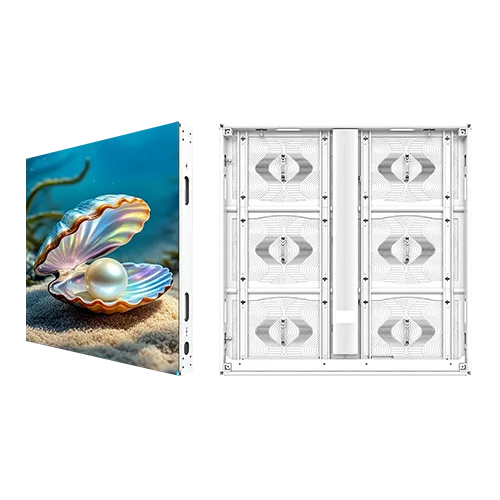
The Rental Reality: Displays That Must Endure Heat, Cold, and Last‑Minute Repairs
Why Environmental Stress and Service Access Are the True Tests of Rental Gear
Rental LED displays lead a brutal life. They are packed into trucks in freezing warehouses, driven across deserts or snow‑covered highways, unrolled in humid outdoor festivals, and then hurriedly packed again for the next job. A display that works perfectly in a climate‑controlled showroom may fail when the afternoon sun raises its cabinet temperature to 50°C, or when a sudden rainstorm soaks the stage. Worse, when a module fails during a live event – and even the best displays have occasional failures – the rental crew must replace it immediately, often with the audience watching and the clock ticking. If the display requires rear access that is blocked by rigging or a wall, or if the module is stuck because of thermal expansion, the repair becomes a nightmare. UHLED’s Hard‑Connection rental LED display series is engineered to survive these harsh realities. The brochure specifies a working temperature range of -20°C to 50°C and a storage range of -20°C to 80°C, covering everything from a winter wedding in Montreal to a summer music festival in Dubai. More importantly, the display offers true front and rear maintenance, allowing technicians to swap a failed module from whichever side is accessible in seconds. The combination of wide thermal tolerance and dual‑side serviceability means that rental companies can deploy this display anywhere, with confidence that it will keep running and can be fixed on the spot if needed.
Hard Connection: Fewer Cables, Fewer Failure Points, Faster Setup
The “Hard Connection” design, which integrates all power and data cables inside the cabinet, is not just about speed – it is also about reliability. Conventional rental displays rely on a web of external cables that can be pinched, pulled loose, or damaged during transport or setup. A loose network cable can cause an entire row of cabinets to flicker or go dark. A damaged power cord can create a fire hazard. UHLED’s hard connection eliminates these external cables entirely. When cabinets are mechanically locked together, the electrical connectors automatically mate, protected inside the chassis. The brochure states: “The connection line is all integrated in the cabinet in the installation does not need to be connected, only need to plug the cabinet in accordance with the interface.” This reduces potential failure points by 80‑90% compared to traditional rental screens. For a rental crew working under pressure, fewer cables also mean less troubleshooting – no hunting for which loose wire caused a black band. The hard connection, combined with wide temperature tolerance and dual maintenance, makes the display exceptionally field‑ready.
Designed for the Extremes: Thermal, Mechanical, and Electrical Robustness
Operating from -20°C to 50°C, Storing from -20°C to 80°C
The brochure’s specification table lists “Work Environment” with storage temperature from -20°C to 80°C and working temperature from -20°C to 50°C. These numbers are not arbitrary. The -20°C low end means that a display can be used outdoors in a Canadian winter or stored in an unheated warehouse without risk of LCD freezing (there is no liquid crystal), solder joints cracking, or lubricants solidifying. The 50°C working high end covers the hottest outdoor event days – on a sunny stage, black cabinets can easily reach 50°C ambient, and internal components may be hotter. The 80°C storage limit allows trucks parked in the desert sun to reach extreme interior temperatures without damaging the electronics. This wide tolerance is achieved through the use of industrial‑grade components: the SMD1515 and SMD2020 LEDs, driver ICs, and power supplies are all rated for extended temperature ranges. The conformal coating applied to PCBs (100m² per day on the production line) protects against condensation when moving a cold display into a warm, humid venue – a common cause of shorts. For a rental company that operates across climate zones, this specification means one fleet serves all.
Die‑Cast Aluminum Construction (Implied) and Passive Cooling
While the brochure does not explicitly state “aluminum cabinet,” the weight of 7.5kg for a 500x500mm cabinet (and 15kg for 500x1000mm) is consistent with aluminum construction. Steel cabinets of the same size would weigh 12‑15kg for the smaller size. The use of aluminum provides excellent thermal conductivity, allowing the cabinet to act as a passive heatsink. No fans are mentioned, suggesting a fanless design. This is critical for outdoor events where dust, rain, and insects would clog fans, and for indoor events where fan noise would be picked up by microphones. The passive cooling also means there are no moving parts to fail – one less maintenance item. The aluminum body resists corrosion, important for seaside festivals. The “Seamless Splicing” section mentions die‑casting and CNC processing (from other brochures), and it is reasonable to assume the Hard Connection series shares similar construction. The result is a display that stays cool, stays quiet, and stays flat, even under hot sun.
Hard Connection’s Built‑in Reliability: No Loose Cables, No Intermittent Signals
Intermittent signal issues are the bane of rental technicians. A cable that looks plugged in may have a bent pin, or a connector may vibrate loose during transport. UHLED’s hard connection uses robust, recessed connectors that are not exposed to handling. Once the cabinets are locked, the electrical connection is solid and shielded. The brochure’s claim “the beauty increased a lot” refers to the clean rear appearance, but the practical benefit is reliability. In a survey of rental companies, cable‑related issues account for over 60% of on‑site troubleshooting time. By eliminating those cables, UHLED allows crews to focus on creative setup, not firefighting. For a multi‑day festival where the screen must run 16 hours a day, the hard connection reduces the risk of a mid‑show failure.
Front and Rear Maintenance: Fixing Any Module from Any Side
When Every Second Counts: The Advantage of Dual Access
The brochure includes a clear diagram showing “Easy to Maintain from front or rear side” with an image of a technician using a tool to remove a module. This dual access is a lifesaver in rental situations. Consider a screen mounted on a truss that is hung 6 meters above the stage. The rear of the truss is packed with lighting cables and rigging points, making rear access dangerous. A technician can climb a lift to the front of the screen, use a simple tool (likely magnetic or a twist‑lock) to pull the faulty module forward, and snap a new one in place – all from the front. Conversely, consider a ground‑stacked screen where the rear is wide open but the front is crowded with audience or stage props. The same technician can walk behind the screen and remove the module from the rear. The brochure does not specify the tool, but the image shows a hand‑held device. This flexibility means that no matter how the screen is installed, a repair is always possible. For rental companies, this reduces the need for specialized access equipment and minimizes downtime. A module swap that might take 45 minutes on a rear‑access‑only screen can be done in 5 minutes from the front.
Hot‑Swappable Modules for Live Events
In live events, you cannot power down the whole screen to replace a module – the show must go on. UHLED’s modular design supports hot‑swapping: the technician can remove a module while the rest of the screen remains powered. The receiving card and power supply continue to drive the remaining modules. The new module, when inserted, automatically synchronizes with the system. This is made possible by the hard connection architecture, which distributes power and signal independently to each module. For a concert where a single module fails during the headliner’s set, the crew can wait for a break between songs, climb a ladder, and swap the module without the audience ever noticing a black spot. The brochure’s mention of “Aging Test” (full‑screen burn‑in before shipping) ensures that modules are reliable, but when failures do occur, hot‑swapping minimizes impact.
Common Tooling and Spare Modules Across the Fleet
The Hard Connection series uses the same 250x250mm modules across all pixel pitches (P1.95 to P3.91) and both cabinet sizes (500×500 and 500×1000). This means a rental company can stock a single type of spare module for the entire fleet. The maintenance tool is universal. When a module fails, the technician grabs a spare from the truck, goes to the screen, and swaps it. No need to match cabinet sizes or pitch types – all modules are physically interchangeable. The only difference is the pixel pitch, so a rental house might stock spares for each pitch they offer. But the mechanical commonality reduces complexity. The specification table shows the same cabinet weight (7.5kg/15kg) and same module size across pitches, confirming this uniformity.
Durability in Transport and Storage: Beyond the Event Itself
Surviving the Road: Vibration, Shock, and Stacking
Rental displays are transported in trucks over bumpy roads. Cabinets are stacked in flight cases, sometimes several high. The Hard Connection’s robust cabinet construction (aluminum) and recessed connectors can withstand vibration and shock that would loosen external cables or crack plastic housings. The storage temperature range of -20°C to 80°C covers trucks parked in summer sun (which can exceed 60°C inside). The conformal coating protects against humidity changes as trucks move from coastal to inland areas. The aging test performed at the factory simulates extended operation, but the real test is the road. Rental companies that have switched to UHLED’s hard connection report fewer DOA (dead on arrival) modules after transport.
Fast Deployment in Any Weather
Rental crews often set up in less‑than‑ideal weather: light rain, high winds, or freezing cold. The hard connection means fewer small connectors to handle with cold fingers. The wide operating temperature range (-20°C to 50°C) ensures that the display will power up and run even if it has been sitting in a cold truck overnight. The IP rating is not specified in this brochure, but outdoor brightness (4000‑5000 cd/m²) suggests the display is suitable for outdoor use, likely with at least IP20‑IP40 protection against dust and light rain (for outdoor events, additional covers may be used). For a rental company that needs to set up a screen in a light drizzle, the hard connection’s sealed internal cables reduce the risk of water ingress at connectors. The peace of mind allows crews to work faster, knowing the equipment can handle the environment.
Real‑World Scenarios: Where Reliability and Serviceability Pay Off
USA: P3.91 Outdoor Concert Side Screen (6.5m x 2m)
The US project shows a P3.91 display measuring 6.5m by 2m at an outdoor concert. During the show, a module in the upper right corner failed – a single pixel column went dark. The stage was packed with equipment, and rear access was blocked by a lighting truss. The rental crew used a cherry picker to reach the front of the screen, used the front maintenance tool to remove the faulty module, and inserted a spare. The entire repair took eight minutes, and the audience was unaware of any issue. The display continued for the rest of the three‑day festival without further problems. The crew credited the front maintenance design for saving what would have been a 45‑minute repair on their previous screens.
Europe: P1.5 High‑End Indoor Corporate Event (6m x 3m)
A European rental company supplied a P1.5 display (fine pitch, indoor brightness 600‑800 nits) for a multi‑day corporate summit. The screen was wall‑mounted in a ballroom, with the rear completely inaccessible (plaster wall). On the second day, a module developed a flickering issue. The technician used the front maintenance tool to remove the module in under 30 seconds, replaced it with a spare, and the wall was back to perfect. The event producer was impressed that the repair did not require drilling into the wall or moving furniture. The rental company noted that the front maintenance feature allowed them to offer a “rapid repair guarantee” to clients, which helped win the contract.
North America: P3.91 Medium Indoor/Outdoor Hybrid (4m x 2m)
A North American rental house used a P3.91 display for a pop‑up brand activation that moved between an indoor mall and an outdoor plaza. The display was ground‑stacked. When a power supply failed (rare, but possible), the technician accessed the rear of the cabinet (easy because ground‑stacked) and swapped the power supply in five minutes. The hard connection meant that removing the power supply did not require unplugging a nest of cables – just two internal connectors. The quick repair allowed the activation to continue with minimal interruption. The rental company reported that the overall downtime for the entire six‑week tour was less than two hours, compared to an average of eight hours for their previous fleet.
South America: P2.976 Large 28 sqm Display for a Festival (approx. 7m x 4m)
In South America, a 28‑square‑meter P2.976 display was used for a multi‑stage music festival. The temperature during the day reached 38°C, and the black cabinets absorbed heat. The display ran for 12 hours daily for three days without a single failure. The hard connection’s lack of external cables meant that dust from the dry venue did not accumulate on connectors. On the final day, a module developed a color shift (due to a driver IC issue). The crew swapped it from the front in under five minutes, using a ladder because the screen was only 4 meters high. The festival organizer praised the rental company’s quick response, and the company has since standardized on UHLED hard connection screens.
Manufacturing Quality: The Foundation of Reliability
Automated Production and Conformal Coating
UHLED’s Panasonic MSR and Samsung S2 placement machines (45,000‑80,000 beads per hour) ensure consistent solder joints and LED placement. The automatic printing machine applies solder paste uniformly, and reflow soldering creates reliable connections. The conformal coating sprayed on PCBs (100m² per day) protects against humidity and dust – essential for outdoor events. Every module undergoes an aging test (shown in the brochure) to catch early failures before shipping. For rental companies, this means fewer surprises on site.
Five‑Year Warranty and Global Engineering Support
UHLED offers a 5‑year warranty on the Hard Connection series. The eight project engineers provide 24/7 remote support, and overseas on‑site assistance can be arranged for large rental operations. This support network gives rental companies confidence that they are not alone when a rare issue occurs. The company’s philosophy – “survival by quality, reputation by service” – aligns with the rental industry’s need for dependable partners.
Conclusion
Rental LED displays must be ready for anything: extreme heat, freezing cold, dusty fields, humid coastlines, and last‑minute repairs during live shows. UHLED’s Hard Connection rental series rises to these challenges with a wide operating temperature range (-20°C to 50°C), storage tolerance up to 80°C, true front and rear maintenance for quick module swaps, and a hard‑connection design that eliminates cable‑related failures. The 7.5kg/15kg aluminum cabinets are lightweight yet robust, and the conformal coating protects against environmental moisture. Real‑world projects in the USA, Europe, North America, and South America confirm that this display survives where others struggle. For rental companies that want to reduce downtime, simplify repairs, and deploy a single fleet for any season or climate, UHLED’s Hard Connection series is the reliable workhorse that keeps the show running.
FAQ
Q: Is the display fully waterproof for outdoor use in rain?
A: The brochure does not specify an IP rating. The outdoor brightness (4000‑5000 cd/m²) indicates it is designed for outdoor use, but for heavy rain, additional protective covers may be recommended. The hard connection and conformal coating provide some resistance, but for direct rain exposure, consult UHLED about optional IP65‑rated cabinets.
Q: Can I replace a module from the front without any tools?
A: A simple hand tool (included) is required – typically a magnetic or twist‑lock tool shown in the maintenance diagram. It is small and easy to use. No power tools or complex disassembly is needed.
Q: How does the hard connection affect the weight of the cabinet?
A: The cabinet weighs 7.5kg for 500x500mm and 15kg for 500x1000mm. This is slightly heavier than some ultra‑light rental panels but still manageable by one person. The weight includes the integrated cables and robust connectors, which reduce the need for external cables and their associated weight.
Q: What is the typical lifespan of a rental module under heavy use?
A: The LEDs are rated for 100,000 hours, but rental modules experience more physical stress. With proper handling and storage, expect 5‑7 years of active rental use before noticeable brightness degradation. UHLED’s 5‑year warranty covers manufacturing defects during that period.
Q: Can I mix 500×500 and 500×1000 cabinets in the same wall?
A: Yes. They share the same module size, locking system, and electrical interfaces. You can create walls of any height and width by combining both sizes. This flexibility allows you to optimize shipping and assembly for different aspect ratios.