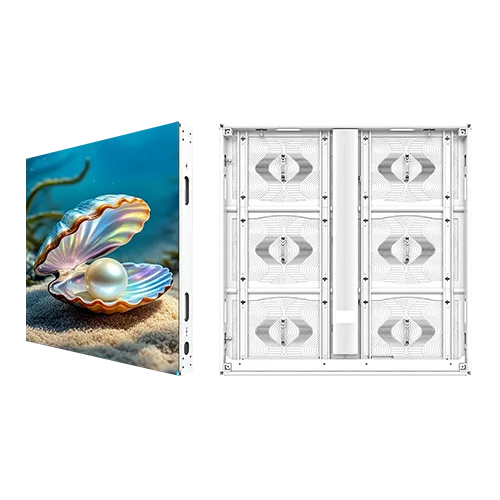
Outdoor COB LED Display
Full Flip Chip COB LED Display — P1.56 & P1.95 — IP65 Waterproof


Choosing the right service access is an important part of LED screen planning. The way technicians reach modules and internal components affects installation requirements, maintenance access, and the overall arrangement of the display.
Front service and rear service designs are both used in different installation conditions. Understanding the differences helps buyers select a cabinet configuration that remains practical throughout the display’s service life.
Front service LED screens allow technicians to access removable LED modules from the viewing side of the cabinet. Depending on the cabinet design, dedicated tools can be used to remove and replace modules without requiring access behind the screen.
Rear service LED screens require technicians to work from the back of the cabinet. The maintenance process therefore depends on whether there is a suitable route to the rear of the display.
Front service cabinets are designed to provide module access from the display side. This configuration is particularly useful when the cabinet is positioned close to a wall or another fixed structure.
Rear service cabinets provide access through the back of the enclosure. The cabinet and supporting structure must therefore allow technicians to reach the rear components during maintenance.
Service direction does not always mean that every component is accessed from the same side. Module maintenance, power supply access, receiving card access, and other service tasks can depend on the specific cabinet structure.
For example, some LED displays support front and rear module maintenance while certain power components remain accessible from the rear. The actual service configuration should therefore be confirmed from the cabinet design rather than judged only by the module access direction.
UHLED’s indoor fixed LED display guide explains how front and rear service access affect installation space and future maintenance.
Front service can reduce the need to reserve working space behind the display. This makes the configuration practical for installations where the cabinet needs to remain close to a wall, architectural surface, or other fixed structure.
This approach can also simplify maintenance planning in indoor environments where furniture, equipment, or other structures may make rear access difficult.
Rear service can be practical when the display is installed on a freestanding structure or in an area with a dedicated maintenance route behind the screen.
The available rear area should provide enough practical access for technicians to reach the components that require servicing. The supporting structure, wiring arrangement, and surrounding equipment should all be considered during installation planning.
The service method should be considered together with the complete mounting structure. A display may have a suitable cabinet design but still become difficult to maintain if the supporting frame blocks the required access route.
Wall mounted, embedded, column mounted, and freestanding installations can therefore create different service requirements. The maintenance path should be confirmed before the final structure is built.
Front service is suitable when access behind the display is limited or unavailable. It allows technicians to work from the viewing side and can make module replacement more practical in restricted installation areas.
Control rooms, indoor commercial spaces, wall mounted displays, and other installations with limited rear clearance can benefit from this configuration.
Rear service can be suitable when a dedicated maintenance area is available behind the screen. It provides technicians with direct access to the rear of the cabinet and can work well with structures designed specifically for rear servicing.
This configuration is more dependent on the permanent availability of the rear maintenance area. Any future changes to walls, equipment, walkways, or supporting structures should also be considered.

Some LED displays support both front and rear maintenance. This gives technicians more than one access route and can provide greater flexibility when installation or future maintenance conditions may change.
For example, the 960×960mm plastic cabinet LED display supports full front and rear maintenance and can be used for wall, column, and embedded installations.
| Consideration | Front Service | Rear Service |
| Module access | From the viewing side | From the rear |
| Rear clearance | Less dependent on rear working space | Requires usable rear access |
| Installation flexibility | Suitable for restricted rear access | Suitable when rear space is available |
| Maintenance route | Technicians work from the front | Technicians work behind the display |
| Structure planning | Focuses on front working access | Requires a suitable rear maintenance area |
| Cabinet configuration | Depends on front accessible module design | Depends on rear accessible cabinet design |
The correct choice depends on the actual installation environment rather than service direction alone. Cabinet construction, component access, supporting structure, and future maintenance conditions should all be reviewed before the display configuration is finalized.
When modules can be removed from the front, technicians can perform certain maintenance tasks without entering a rear service area. This can be useful when the display is installed against a wall or inside a space with limited access.
Rear service allows technicians to work directly from behind the cabinet. When a suitable maintenance platform or service corridor is already available, this arrangement can provide practical access to rear components.
Displays with both front and rear maintenance options provide an alternative access method when site conditions change. This can be useful for projects where maintenance requirements may vary between installation and future operation.
UHLED’s front and rear maintenance design demonstrates how dual access can be incorporated into an outdoor LED display configuration.
Front service allows technicians to access designated modules and service points from the display side. However, the exact components that can be accessed from the front depend on the cabinet design.
Rear service requires a practical route to the back of the display. The required arrangement depends on the cabinet structure and the components that need to be serviced.
A dual service cabinet supports both front and rear access for designated components. This can provide greater flexibility when the installation environment has changing or mixed access conditions.
Front service suits installations with limited rear access, while rear service is practical when a dedicated maintenance area is available. Dual service provides greater flexibility for changing site conditions.
Choose the service configuration based on the cabinet design, installation structure, and maintenance requirements. For project specific recommendations, contact the engineering team.