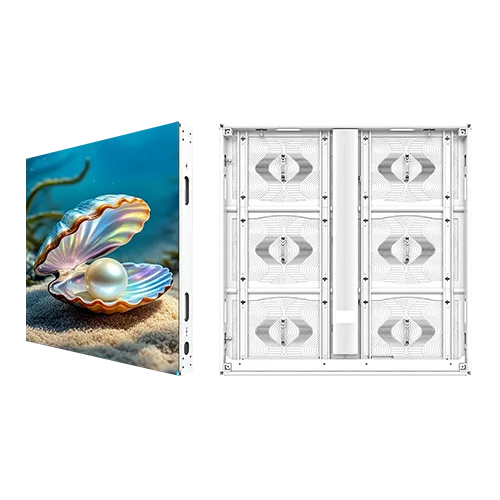
Outdoor COB LED Display
Full Flip Chip COB LED Display — P1.56 & P1.95 — IP65 Waterproof


Choosing the right brightness is an important part of planning an outdoor LED screen. A display that is too dim may become difficult to see in daylight, while excessive brightness may not provide a practical benefit for every installation.
The required nit level should therefore be considered in relation to the installation environment, viewing conditions, and intended application.
Nit is a unit used to describe display luminance. One nit equals one candela per square meter, written as 1 cd/m².
A higher nit value means that the display can produce more light from its surface. This is particularly important for outdoor LED screens because surrounding daylight can affect the visibility of screen content.
Outdoor LED screens operate under changing ambient light conditions. Direct sunlight can make images, text, and advertisements more difficult to see if the display does not provide sufficient luminance.
Higher brightness helps maintain screen visibility when ambient light is strong, making brightness an important specification for outdoor digital signage and large LED displays.
For outdoor installations exposed to strong daylight, 5,000 nits or more can serve as a useful reference. The actual requirement depends on factors such as sunlight exposure, screen orientation, viewing conditions, and application.
A display installed in direct sunlight generally needs a higher brightness level than one protected by surrounding structures or partial shade.

A brightness level of 5,500 nits is used for outdoor LED products designed for daylight applications.
For example, UHLED’s outdoor LED poster display provides 5,500 cd/m² brightness in P2.5, P3.076, and P4 configurations. It is designed for applications such as commercial streets, bus stops, and scenic areas, where high brightness helps maintain clear and vivid images under direct sunlight.
Higher brightness specifications are also available for outdoor LED displays used in demanding environments.
UHLED’s aluminum cabinet LED display provides brightness above 6,000 cd/m² for P4, P8, and P10 configurations, while P5.7 and P6.67 configurations provide above 5,500 cd/m². The display also uses IP66 protection for outdoor applications.
These specifications show that brightness can vary according to the selected product and pixel pitch rather than following one fixed value for every outdoor LED screen.
The amount of direct sunlight reaching the display should be considered before selecting the brightness specification.
Open roadside locations, commercial areas, and stadiums can experience strong daylight for extended periods. In these conditions, higher brightness helps maintain readable content.
Displays installed in partial shade may have different requirements, so the actual installation environment should be assessed before ordering.
Brightness should be evaluated together with viewing distance and pixel pitch.
Pixel pitch affects image detail and the appropriate viewing distance, while brightness affects how clearly the content remains visible under ambient light. Selecting these specifications together provides a more suitable display configuration for the site.
Different outdoor applications have different viewing conditions.
Advertising screens, roadside displays, commercial signage, and stadium LED screens may operate at different distances and under different levels of ambient light. The intended application should therefore be considered when determining the required brightness.

Pixel pitch describes the distance between individual LED pixels and affects image detail and viewing distance.
Outdoor LED displays are available in different pixel pitch configurations for different applications. Brightness should therefore be evaluated alongside pixel pitch instead of being treated as the only important specification.
An outdoor LED screen also needs suitable protection against rain, dust, humidity, and other environmental conditions.
UHLED’s aluminum cabinet LED display uses an IP66 protection rating and is designed for applications including outdoor advertising, commercial plazas, scenic spots, and transportation hubs.
A suitable display should therefore combine the required brightness with an appropriate protection level for its installation environment.
A 5,000 nit specification can be suitable for many outdoor applications exposed to daylight. The final requirement depends on sunlight exposure, viewing conditions, screen orientation, and application.
A 5,500 nit brightness level can be suitable for outdoor applications exposed to direct sunlight. UHLED’s outdoor LED poster display provides 5,500 cd/m² brightness for applications such as commercial streets, bus stops, and scenic areas.
No. The required brightness depends on the installation environment and product configuration. Some outdoor displays use 5,500 cd/m², while other configurations provide brightness above 6,000 cd/m².
Yes. Brightness affects daytime visibility, while pixel pitch affects image detail and viewing distance. Both specifications should be considered when selecting an outdoor LED display.
For many outdoor LED applications, 5,000 nits or more is a useful reference, while 5,500 cd/m² and above 6,000 cd/m² configurations are available for different outdoor requirements.
The final brightness should be selected according to sunlight exposure, viewing conditions, pixel pitch, and application. For a project specific recommendation, contact UHLED with your installation conditions and display requirements.