


Outdoor COB LED Display
Full Flip Chip COB LED Display — P1.56 & P1.95 — IP65 Waterproof


Choosing the right pixel pitch is essential when planning an outdoor LED display. The correct pitch depends on the distance from which the screen will be viewed, the level of image detail required, and the conditions of the installation.
Understanding these factors helps you select a pixel pitch that delivers clear content while keeping the display specification appropriate for the project.
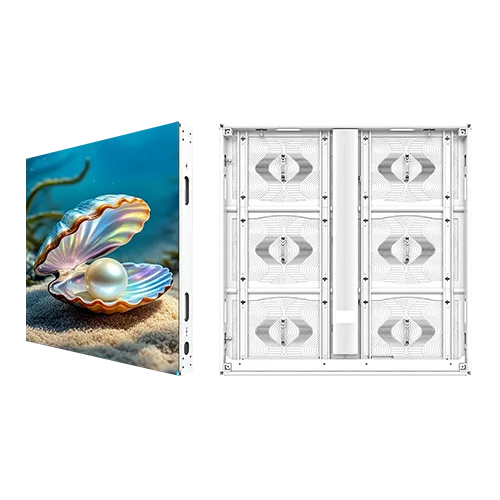
Pixel pitch refers to the distance between the centers of two adjacent LED pixels, measured in millimeters. A smaller pixel pitch places pixels closer together, resulting in a higher pixel density across the same display area.
For an outdoor LED display, this relationship directly affects the level of image detail that can be reproduced. Smaller pitches can show fine text, graphics, and detailed images more clearly when viewers are relatively close to the screen.
As pixel pitch increases, pixel density decreases. However, a larger pitch does not necessarily produce poor image quality.
When the audience is positioned farther from the display, individual pixels become less noticeable. Screen size, viewing distance, content type, and viewing conditions should therefore be considered together rather than judging pixel pitch on its own.
Viewing distance is one of the main factors used to narrow down suitable pixel pitch options. A commonly used rule of thumb relates the numerical pixel pitch in millimeters to an approximate minimum viewing distance in meters.
For example, a P4 display may be considered for viewing from around 4 meters, while a larger pitch can be suitable when the audience is positioned farther away. This should be treated as a practical guideline rather than a fixed engineering requirement.
Actual viewing conditions can vary according to screen size, content, viewing angle, ambient light, and the level of detail required.
Displays installed near pedestrian areas, entrances, commercial locations, or other places where viewers can stand relatively close may benefit from a smaller pixel pitch.
For example, UHLED’s 1000×1000mm outdoor display supports P2.97, P3.91, P4.81, P6.25, P7.81, and P10.41 pixel pitches. These options provide different levels of pixel density for different viewing requirements.
Large billboards, roadside displays, and other screens viewed from greater distances can use larger pixel pitches when fine image detail is not the main requirement.
UHLED’s 960×960mm outdoor LED display supports P4, P5, P6.67, P8, and P10 options. A South Korea school entrance project also uses a P5 outdoor LED display measuring 8.96m × 0.96m, with 5000 to 6000 cd/m² brightness. The display was designed for clear viewing from the surrounding area.
These examples show why pixel pitch should be selected according to the actual viewing environment rather than the application alone.
Pixel pitch alone does not determine whether an outdoor LED display will perform well. Brightness also needs to match the lighting conditions at the installation site.
Outdoor displays may operate under direct sunlight, changing weather, and different ambient light levels throughout the day. The required brightness should therefore be evaluated according to the location and application rather than applying one brightness value to every project.
Content should also be considered. Detailed text and graphics may benefit from a finer pitch, while large images and simple messages can remain effective from greater distances.
Outdoor displays need suitable protection against rain, dust, humidity, and other environmental conditions. UHLED’s outdoor LED display range includes products with IP65 and IP66 protection, depending on the cabinet design and product configuration.
The required protection level should be selected according to the installation environment. A fully exposed roadside display may face different conditions from a screen installed in a partially sheltered location.
Maintenance access should be considered before the display configuration is finalized. Depending on the cabinet design and installation position, front or rear access may be required.
The cabinet structure, installation position, power system, and available service space should all be reviewed as part of the project. Pixel pitch should therefore be selected as one part of the complete display configuration.

Smaller pixel pitches require more pixels within the same display area. This can increase the number of LED components and related electronic components required for the display.
Selecting a smaller pitch than the application requires may therefore increase the initial investment without providing a meaningful visual benefit for viewers who remain at a long distance.
The practical approach is to determine the required viewing distance first and then compare the pixel pitch options that meet the visual requirements.
Pixel pitch can also affect the overall system configuration. Higher pixel density can influence power distribution, control components, thermal management, and maintenance requirements.
These factors should be considered together with the expected operating conditions. The objective is to select a specification that provides the required image quality without unnecessarily increasing the demands of the complete display system.
A pixel pitch that is too large can make individual pixels more noticeable at close viewing distances. Fine text and detailed graphics may also appear less clear.
A pixel pitch that is too small can increase pixel density and overall project cost without providing a meaningful benefit when viewers are far from the screen.
Yes, different outdoor LED displays can use different pixel pitch configurations. The choice should match the screen size, viewing distance, content, and installation requirements.
The right pixel pitch should match the viewing distance, content requirements, and installation conditions. Smaller pitches can suit closer viewing, while larger pitches can be practical for long distance applications.
For project specific recommendations, you can contact UHLED with your screen dimensions, viewing distance, and installation requirements.


