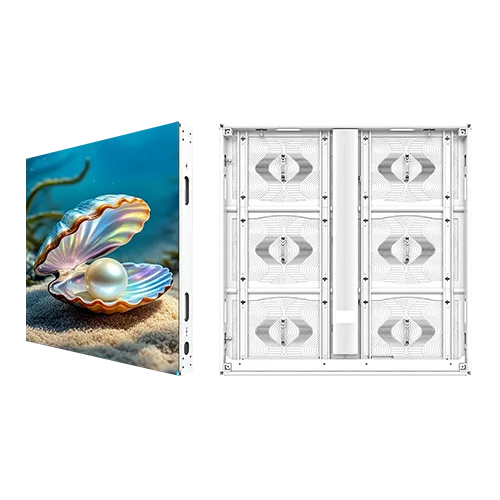
Outdoor COB LED Display
Full Flip Chip COB LED Display — P1.56 & P1.95 — IP65 Waterproof


Choosing the right pixel pitch starts with determining the minimum viewing distance between the audience and the screen. A finer pixel pitch provides more pixels within the same display area, making it better suited to close viewing and detailed content such as presentations, data dashboards, and high resolution video.
For indoor fine pitch applications, options can range from P0.9 to P2.5. However, pixel pitch should not be selected independently. Screen size, viewing distance, content type, ambient lighting, and project budget should all be considered before confirming the final specification.
Pixel pitch should be evaluated together with screen size and content type. Large displays used for presentations, data visualization, or detailed graphics may benefit from finer pixel pitches, while simple promotional content may not require the smallest pitch.
Consider screen dimensions, viewing distance, and content detail together to achieve the right balance between image clarity and project cost. Once these requirements are defined, the next step is to compare COB and SMD packaging technologies.
SMD and COB are two LED packaging technologies used in indoor LED displays. SMD is a mature option for general indoor applications, while COB is designed for fine pixel pitch applications that require a more protected display surface.
| Feature | SMD | COB |
| Packaging | Packaged LEDs mounted onto the PCB | LED chips mounted directly onto the substrate |
| Pixel Pitch | Suitable for indoor fine pitch applications | UHLED options from P0.78 to P1.87 |
| Surface Protection | Standard LED surface | Protected encapsulated surface |
| Maintenance | Conventional maintenance | Front maintenance available |
COB and SMD are suitable for different indoor LED display requirements. Buyers should consider viewing distance, pixel pitch, surface protection, maintenance access, application, and budget before making a decision.
Choose COB when fine pixel pitch, close viewing, surface protection, and front maintenance are important.
Choose SMD when a mature and practical solution is required for general indoor fine pitch applications.
Control rooms require continuous operation and clear visualization of complex operational data. An LED video wall for these environments needs to support detailed content, multiple signal sources, and reliable operation over extended periods.
A dedicated LED display for control rooms can support 24/7 operation, ultra fine pixel pitch, and multiple signal sources, making this type of display suitable for monitoring and data visualization applications.

Retail stores and shopping malls use indoor LED displays for promotional content, product communication, brand presentation, and visual merchandising. Depending on the available space, projects can use large video walls, cube displays, poster displays, or other specialized configurations.
For smaller retail installations, an indoor poster LED display can provide a compact option where a standalone display or flexible configuration is preferred. Screen dimensions, viewing distance, ambient lighting, and content requirements should still be considered before selection.
Corporate conference rooms require clear presentation of documents, video content, presentations, and other visual information. Screen configuration should be matched to the room size, viewing distance, content format, and required resolution.
Displays with 16:9 configurations can be matched to common HD and 4K content formats to maintain a consistent image layout. The appropriate screen size and pixel pitch should also be evaluated according to the distance between the display and viewers.
The initial equipment quotation represents only one part of the cost of an indoor LED screen display project. Buyers should also consider structural installation, power infrastructure, maintenance access, cabinet configuration, and other project specific requirements when evaluating the total investment.
Screen size, pixel pitch, cabinet material, and display configuration can all affect equipment and installation requirements. Larger screens and finer pixel pitches may require additional components and more detailed installation planning.
Maintenance access can directly affect installation planning and service efficiency. Front maintenance allows technical teams to access display modules from the front using specialized tools, which can reduce rear access requirements where installation space is limited.
Cabinet materials can also influence installation requirements and project costs. Die cast aluminum and iron cabinet options can be evaluated according to structural requirements, installation conditions, weight considerations, and budget.
The total project cost should therefore be evaluated across hardware, structural installation, power infrastructure, and ongoing maintenance rather than equipment price alone.
When choosing an indoor LED screen display manufacturer, buyers should evaluate production capacity, product range, quality control, customization capabilities, and technical support. A supplier with established manufacturing resources can be better positioned to handle different project volumes and application requirements.
Production capacity should not be evaluated by facility size alone. Buyers should also examine manufacturing processes, product consistency, quality inspection procedures, and the manufacturer’s experience with similar indoor LED display projects.
Certifications and warranty terms provide additional information when comparing suppliers. Buyers should verify applicable certifications for the intended market and understand exactly which components and services are covered by the warranty.
For commercial LED display projects, supplier evaluation should also extend beyond the initial purchase. Spare parts availability, maintenance support, engineering communication, customization capabilities, and after sales service can all affect long term project operation.
UHLED was founded in 2015 and operates a 5,000 square meter manufacturing facility with an annual output capacity of 120,000 square meters. The company provides indoor LED display solutions covering fine pitch, COB, SMD, poster, conference, retail, and control room applications.

Pixel pitch, LED packaging technology, cabinet materials, screen dimensions, structural installation, and maintenance requirements can all affect project costs. Finer pixel pitches generally require higher LED density and can increase hardware costs, while cabinet design and installation conditions can affect structural and labor expenses.
The appropriate pixel pitch depends on viewing distance, screen size, content detail, ambient lighting, application requirements, and budget. Finer pitches are generally considered for close viewing and detailed content, while larger pitches can be suitable when the viewing distance is greater.
SMD technology uses packaged LEDs mounted onto the circuit board and is widely used for indoor fine pixel pitch applications. COB technology uses chip based packaging and can provide a protected display surface with fine pixel pitch options for applications requiring detailed visuals and convenient front maintenance.
Front maintenance allows technical teams to access display modules from the front using specialized tools. This can reduce rear access requirements and is particularly useful for wall mounted installations where available service space is limited.
Choosing the right indoor LED screen display requires more than comparing pixel pitch or equipment price alone. Buyers should evaluate viewing distance, screen size, LED packaging technology, installation requirements, maintenance access, and total project costs together.
UHLED provides indoor LED display solutions covering fine pitch, COB, SMD, poster, conference, retail, and control room applications, with manufacturing capabilities and technical support for different project requirements. Contact the engineering team to discuss your screen dimensions, viewing conditions, pixel pitch, and project requirements.