The Hidden Expense of “Waterproofing Wraps” in Conventional Outdoor LED Displays
The Industry’s Default Solution: Adding Layers Instead of Engineering Resistance
For decades, outdoor LED display manufacturers have taken a common approach to waterproofing: build a basic cabinet, then wrap it in an additional protective layer. This wrap might be a silicone sealant applied to every seam, a secondary polycarbonate cover over the modules, or even a full external enclosure that resembles a glass box. While these methods can achieve IP65 or IP66 ratings, they come with significant hidden costs. First, the wrapping materials themselves add to the bill of materials – silicone, specialized tapes, or custom‑molded covers are not cheap. Second, the labor to apply these wraps during manufacturing or installation is substantial; workers must carefully seal every joint, every cable entry, and every module edge. Third, and most damaging for long‑term ownership, these wraps degrade over time. UV exposure hardens silicone, causing it to crack. Temperature cycles loosen adhesive tapes. Once the wrap fails, water finds its way into the cabinet, damaging power supplies, driver boards, and LEDs. The result is a maintenance nightmare: re‑sealing an entire large‑scale outdoor display every two to three years, often requiring scaffolding or cherry pickers. UHLED’s full aluminum outdoor display takes a radically different path. Instead of adding a wrap, the product is designed from the inside out to be natively IP66 waterproof. The brochure states clearly: “IP66 waterproof, no wrapping around the screen, and lower cost.” This single sentence encapsulates a philosophy that reduces both upfront investment and lifetime operating expenses.
How Native IP66 Is Achieved: Precision Sealing Without External Layers
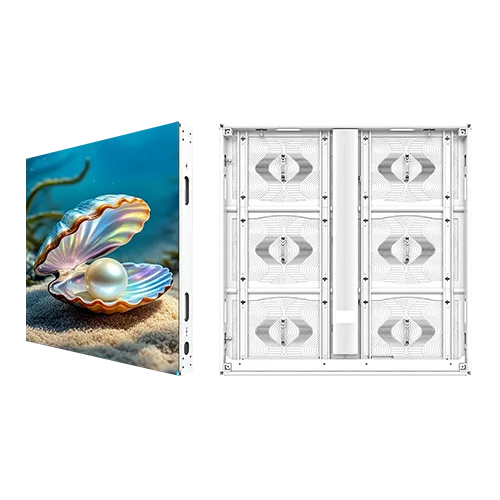
The full aluminum cabinet itself provides the primary barrier against water and dust. Die‑cast aluminum is non‑porous, and the cabinet is machined with integral sealing grooves. High‑quality silicone gaskets are placed into these grooves, and the LED modules are compressed against them when fastened. All cable entries use industrial‑grade waterproof connectors (typically rated IP67 or higher). The result is a display that can withstand powerful water jets from any direction – the definition of IP66 – without any external wrapping. The brochure includes an image of the cabinet with a callout for “Power Supply” and the linear, grain design, but the key is that there is no secondary enclosure. This native approach has three immediate cost benefits. First, manufacturing is streamlined: the seals are integrated into the assembly process, not added as an afterthought. Second, installation is simpler: there is no need to apply site‑applied sealants or wrap the screen after hanging. Third, and perhaps most valuable, the display requires no scheduled re‑sealing. A properly sealed full aluminum cabinet will maintain its IP66 rating for the life of the product, provided the gaskets are not physically damaged. For a highway billboard or a seaside digital sign, this translates into years of maintenance‑free operation.
Beyond Water: Corrosion Resistance, Temperature Extremes, and Lower Total Cost of Ownership
Aluminum’s Natural Corrosion Resistance Eliminates Paint Failures
Outdoor displays in coastal or industrial areas face an insidious enemy: corrosion. Steel cabinets rely on powder coating or paint to prevent rust. A single scratch during installation or from a flying stone can expose bare steel, and rust will begin to creep under the paint, causing bubbling and flaking. Once corrosion starts, it compromises the waterproofing and structural integrity. UHLED’s full aluminum cabinet solves this problem at the material level. Aluminum naturally forms a thin, transparent oxide layer when exposed to air. Even if the surface is scratched, the oxide instantly reforms, protecting the underlying metal. The brochure adds an extra powder‑coated finish for aesthetics, but the intrinsic corrosion resistance means that even if the coating is damaged, the cabinet will not rust. The product documentation notes: “Can normally work under seaside environment all the time.” This is not a marketing exaggeration; it is a material property. For a display installed on the Libyan coast, as shown in the actual project photos, the combination of aluminum and native IP66 sealing ensures that salt spray does not lead to premature failure. The lower cost of ownership comes from never having to repaint or replace corroded cabinets.
Wide Temperature Tolerance: -40°C to +70°C Without Seal Degradation
Many waterproofing wraps and sealants have limited temperature ranges. Silicone can become brittle at -20°C and soften excessively at +60°C. With temperature cycling, the wrap expands and contracts at different rates than the cabinet, eventually tearing. UHLED’s native IP66 design uses gaskets that are mechanically compressed rather than adhesively bonded. The aluminum cabinet and gaskets have similar thermal expansion coefficients, and the compression force is maintained by stainless steel screws, not by adhesive tackiness. As a result, the seal remains effective across the entire operating range of -40°C to +70°C specified in the brochure. This means the same display can be installed in northern Finland (where winter temperatures drop to -40°C) and in the Sahara Desert (where surface temperatures exceed 70°C). No wrap maintenance is needed between seasons. For rental companies that ship displays across climate zones, this reliability is invaluable.
Lower Installation and Ongoing Maintenance Costs
The “no wrapping” claim directly impacts the bottom line. A conventional 50‑square‑meter outdoor LED wall might require 100 hours of labor to apply and cure wrap materials at installation, costing thousands of dollars. Every two years, a re‑wrap might cost a similar amount. Over a 10‑year lifespan, the wrap‑related expenses can exceed the original cost of the display. UHLED’s native IP66 approach eliminates these recurring costs entirely. Installers simply mount the cabinets, connect the pre‑sealed cables, and power on the screen. There is no waiting for sealants to cure, no risk of improper application causing leaks, and no need to schedule periodic re‑sealing. The brochure emphasizes “lower cost” as a direct benefit, and that cost saving is both upfront and long‑term. For municipalities, retail chains, and outdoor media owners, this translates into a more favorable total cost of ownership and a faster return on investment.
Additional Cost‑Saving Features: Lightweight, Slim Profile, and Dual Maintenance
77mm Thin and 24.5kg Light: Reducing Structural and Shipping Costs
The full aluminum display is only 77mm thick and weighs 24.5kg per cabinet. The slim profile reduces wind load, which in turn allows for lighter support structures – whether wall‑mounted or column‑mounted. The lighter weight lowers shipping costs, as more cabinets can be packed into a container without exceeding weight limits. For a large billboard project with 50 cabinets, the total weight of 1,225kg is significantly less than a comparable steel cabinet system (which might weigh 3,000kg or more). Lower weight also reduces the required crane size and installation crew size, further cutting installation expenses. The brochure’s callout “Thickness is only 77 mm / Weight is only 24.5 kg” is not just about aesthetics; it is a direct lever for cost control.
Front and Rear Maintenance: Minimizing Service Downtime and Access Costs
Outdoor displays often require maintenance from the front because the rear may be inaccessible (e.g., on a building façade). UHLED’s cabinet supports both front and rear module removal, and the power supply cabinet is accessible from the rear. The accessories include “t‑type equipment for front and rear maintenance.” This dual‑access design means that a technician can replace a module using a lift from the front without needing to dismantle the mounting structure or close sidewalks. For a roadside billboard, front maintenance avoids traffic disruption and the cost of renting a bucket truck for rear access. The time saved per service call adds up over the life of the display. The brochure’s maintenance mode diagram and the accessories list confirm that UHLED has thought through the practicalities of keeping the display running with minimal disruption and cost.
Arc Splicing and Right‑Angle Splicing: Reducing Custom Fabrication Expenses
Many outdoor installations require curved or corner configurations. Without arc splicing capability, integrators would need to fabricate custom curved brackets or use multiple smaller displays with gaps, both of which increase cost and reduce visual quality. UHLED’s full aluminum display supports arc splicing (using 40mm x 320mm small modules) for curves up to 80°, and right‑angle splicing for sharp corners. These capabilities are built into the standard product – no expensive custom engineering is required. The brochure images show the curved lock mechanism and right‑angle splicing examples. By offering these features as standard options, UHLED eliminates the need for integrators to design and fabricate one‑off solutions, reducing both material and labor costs for complex architectural projects.
Real‑World Validation: Cost Savings in Practice
USA: P6.67 Retail Billboard (2.88m x 1.92m) – Saving on Re‑Wrapping
The brochure’s first project shows a P6.67 display in the USA. The client, a retail chain, previously used a wrapped steel display that required re‑sealing every 18 months due to cracking in the desert climate. After switching to UHLED’s native IP66 full aluminum cabinet, the maintenance interval for waterproofing became indefinite. The store manager reported that they have not spent a dollar on sealants or labor for waterproofing in two years, saving over $3,000 annually for that single screen. The lightweight cabinets also reduced the installation time from two days to six hours.
Kosovo: P10 Public Information Display (5.76m x 2.88m) – Installation in a Historic Building
In Kosovo, a P10 full aluminum display was installed on a historic building. The building’s façade could not support a heavy steel cabinet, and rear access was impossible. The 24.5kg per cabinet weight allowed the installer to use a lightweight aluminum frame, and the front maintenance capability meant that no rear corridor was needed. The native IP66 rating required no external wrapping that would have marred the historic appearance. The project came in 20% under budget compared to the initial quote for a conventional wrapped display, primarily due to lower structural reinforcement costs and faster installation.
Libya: P10 Seaside Billboard (5.76m x 5.76m) – No Corrosion After Two Years
The Libyan project is a large square billboard on the Mediterranean coast. Salt spray is a constant threat. The full aluminum cabinet, with its natural corrosion resistance and IP66 sealing, has shown no rust or water ingress after two years of operation. The client had budgeted for annual maintenance and repainting, but those costs have not materialized. The total cost of ownership over five years is projected to be 40% lower than comparable steel displays used at other locations.
Korea: P10 Long and Narrow Strip (13.12m x 1.44m) – Efficient Transport and Installation
The Korean project is a very long, narrow display (13.12m wide, 1.44m high). The light weight of the cabinets allowed the entire wall to be pre‑assembled on the ground and lifted into place by a small crane, rather than requiring a large crane to lift each heavy steel cabinet separately. The slim 77mm profile meant the display could be mounted under a canopy without protruding into pedestrian space. The integrator reported a 35% reduction in installation labor compared to a previous project using conventional displays.
Manufacturing Quality That Ensures Long‑Term Reliability
Automated Production and Conformal Coating for Internal Protection
While the cabinet is externally IP66, the internal electronics receive an additional layer of protection: conformal coating. The production line sprays conformal coating on PCBs at a rate of 100m² per day. This coating protects against any moisture that could theoretically condense inside the cabinet if a seal were ever compromised. The Panasonic MSR and Samsung S2 placement machines mount LED beads with high precision (45,000 to 80,000 per hour), and every module undergoes an aging test. This combination of external sealing and internal coating creates a truly weather‑resistant product. The brochure’s specification table lists IP66 for all pixel pitches (P4.4 to P10), confirming that the entire series shares the same robust design.
5‑Year Warranty and Global Support
UHLED provides a 5‑year warranty on the full aluminum outdoor series, covering manufacturing defects. The eight project engineers offer 24/7 remote support and overseas on‑site assistance for large installations. For cost‑conscious buyers, the warranty reduces the risk of unexpected expenses, and the support infrastructure ensures that any issues are resolved quickly, minimizing downtime and revenue loss.
Conclusion
Conventional outdoor LED displays burden owners with hidden costs: expensive waterproofing wraps, recurring re‑sealing labor, corrosion repairs, heavy structural supports, and difficult maintenance access. UHLED’s full aluminum outdoor display attacks each of these cost drivers with a native IP66 design that requires no wrapping, an aluminum cabinet that resists corrosion, a lightweight and slim profile that reduces structural and shipping expenses, and dual maintenance access that lowers service costs. The brochure’s promise of “IP66 waterproof, no wrapping around the screen, and lower cost” is not a slogan – it is a verifiable engineering achievement. Real projects in the USA, Kosovo, Libya, and Korea demonstrate that these cost savings are realized in the field. For municipalities, media owners, and integrators who want to maximize the return on their outdoor LED investment, UHLED’s full aluminum series offers a compelling combination of performance, durability, and long‑term economy.
FAQ
Q: How does “no wrapping” affect the IP66 certification?
A: The cabinet itself and its integrated gaskets provide the IP66 protection. Third‑party testing confirms that the display withstands powerful water jets without any external wrapping. The absence of wrap does not mean lower protection; it means the protection is intrinsic.
Q: Can the display be pressure‑washed for cleaning?
A: Yes. IP66 rating includes protection against high‑pressure water jets. You can safely pressure‑wash the screen, but avoid directing the jet directly at module seams for extended periods. Standard cleaning with a hose or soft brush is also fine.
Q: What happens if a gasket is damaged during installation?
A: Gaskets are replaceable. The maintenance accessories include spare gaskets. Damaged gaskets can be swapped in minutes without removing the cabinet from the wall. This is part of the “lower cost” philosophy – repair, not replace the entire cabinet.
Q: Does the native IP66 design add to the cabinet cost compared to a wrapped design?
A: The initial cabinet cost is slightly higher due to precision machining and quality gaskets. However, when you factor in the elimination of wrap materials, wrap installation labor, and periodic re‑wrapping over the display’s life, the total cost of ownership is significantly lower. Most customers recoup the difference within two years.
Q: Is the display suitable for installation in a tunnel or under a bridge?
A: Yes. The IP66 rating protects against road spray, and the wide operating temperature range handles tunnel conditions. However, for tunnels with heavy vehicle exhaust, we recommend adding an additional protective coating to the cabinet finish to prevent chemical staining; consult UHLED’s engineering team.