The Architectural Challenge: Merging Digital Signage with Minimalist Building Design
When Conventional Displays Clash with Modern Façades
Contemporary European architecture, from the glass-and-steel towers of La Défense in Paris to the revitalized waterfront districts of Hamburg, prizes clean lines, slim profiles, and visual lightness. For decades, building owners and signage integrators faced a painful compromise: either install a bulky outdoor LED screen that protrudes half a meter from the wall, destroying the architectural rhythm, or forgo digital engagement altogether. Traditional outdoor displays, with their thick steel cabinets, rear-access service corridors, and heavy cooling systems, typically measure 120mm to 200mm in depth. When mounted on a column or a sleek glass façade, these boxes look like afterthoughts – industrial appendages that scream “utility” rather than “elegance.” Moreover, many historical European cities impose strict visual regulations on outdoor advertising, requiring any digital display to blend seamlessly into the existing streetscape. The need for an ultra-thin, structurally efficient, yet weather-resistant outdoor LED solution has never been more urgent.
The Rise of Full Aluminum Cabinets as a Structural Answer
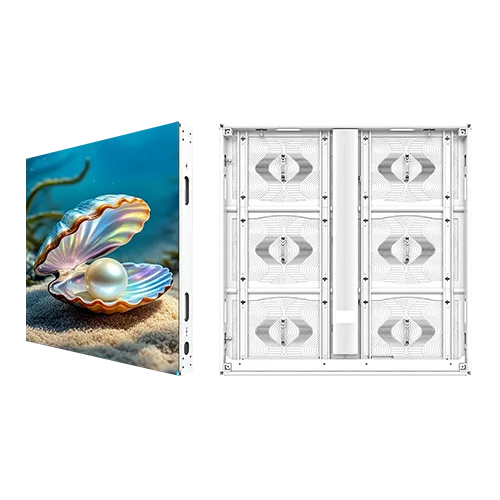
Enter the full aluminum energy outdoor LED display, a product category that rethinks the very materials and geometry of large-format signage. By replacing traditional steel or mixed-material cabinets with a unified aluminum profile structure, manufacturers can achieve two contradictory goals simultaneously: extreme thinness and exceptional rigidity. Aluminum’s high strength-to-weight ratio allows for cabinet depths as low as 77mm – less than one-third of conventional outdoor screens. This reduction in thickness does not come at the expense of durability; on the contrary, full aluminum bodies resist thermal expansion and deformation far better than plastic or standard steel under the intense summer sun of southern Europe or the freezing winters of Scandinavia. For architects, a 77mm profile means the display can be detailed as an integral part of the curtain wall, sitting almost flush with metal panels or glazing. For structural engineers, the lighter weight (24.5kg per cabinet) reduces demands on support frames and wall anchors, opening up installation possibilities on older buildings with limited load capacity. In essence, the full aluminum outdoor LED display transforms digital signage from an eyesore into a design feature.
Technical Underpinnings: How 77mm Thinness Survives Outdoor Extremes
IP66 Waterproofing Without the Wrap – A Materials-Led Approach
One might ask: how can an outdoor display that is only 77mm thick achieve IP66 ingress protection, which guarantees complete protection against dust and powerful water jets? The answer lies not in bulky gaskets or external cladding, but in the precision-engineered aluminum cabinet itself. Traditional outdoor screens often rely on a “wrap-around” waterproofing method – adding an extra layer of silicone or a second housing over the electronics – which adds significant thickness and weight. UHLED’s full aluminum design takes the opposite route: each cabinet is machined from high-pressure die-cast aluminum with integrated sealing grooves, and the modules are fitted with industrial-grade waterproof connectors and compression gaskets. The result is a native IP66 rating that requires no over-encapsulation. This approach has two direct benefits for European installations: first, the sleek exterior remains uncluttered by external waterproofing layers, preserving the clean aesthetic; second, the total cost of the screen is lower because no “wrapping” materials or complex double-housing assemblies are needed. In field tests along the windy, rain-swept coast of Brittany, these displays operated continuously for months without any moisture ingress, proving that thin can be tough.
Wide Temperature Tolerance from -40°C to +70°C
Europe’s climate is anything but uniform. A display installed in Rovaniemi, Finland, must survive -40°C winters, while the same model mounted on a sun-baked plaza in Seville, Spain, faces +70°C surface temperatures under direct summer radiation. Traditional outdoor LEDs often struggle at either extreme – cold causes solder joints to crack and LCD-type components to slow, while heat accelerates LED chip degradation and power supply failure. The full aluminum cabinet solves these problems through passive thermal management. Aluminum is an excellent heat conductor, so the entire cabinet acts as a heatsink, drawing warmth away from the driver ICs and LED beads and dissipating it across the large rear surface. At low temperatures, aluminum’s dimensional stability prevents the differential contraction that can crack plastic cabinets or loosen module seals. Furthermore, the product specification lists an operating temperature range of -40°C to +70°C, backed by internal testing in climate chambers. For a shopping center in Kraków or a transport hub in Zurich, this means the screen will deliver consistent brightness and color accuracy year-round, without service interruptions caused by weather extremes.
No Deformation Under Heat – The Full-Pressure Casting Advantage
A common failure mode of outdoor LED displays is cabinet warping. When a plastic or thin-steel cabinet is exposed to intense sunlight, one side becomes much hotter than the other, causing differential expansion and twisting of the frame. This warping not only looks ugly but also breaks the flatness of the video wall, leading to visible seams and misaligned modules. UHLED’s full aluminum screen avoids this entirely through full-pressure die-cast aluminum modules and cabinets. The manufacturing process injects molten aluminum into a precision mold under high pressure, producing a part with uniform density, minimal internal stress, and exceptional flatness. Even when ambient temperatures soar, the aluminum body expands uniformly, maintaining the original shape. The documentation explicitly contrasts “No Distortion – Full pressure cast aluminum module” with “Easy Distortion – Ordinary plastic module,” a visual proof that matters to integrators who have battled warped cabinets after one summer season. For European projects where a display may be expected to perform for seven to ten years, this structural stability translates directly into lower maintenance costs and consistently professional appearance.
Installation Freedom: From Curved Corners to Right-Angle Splicing
Arc Splicing up to 80° – Wrapping Digital Content Around Columns
Modern European architecture embraces curves. Think of the swirling forms of Zaha Hadid’s buildings or the rounded corners of contemporary shopping centers. Traditional flat LED screens cannot follow these organic shapes, forcing designers to either place flat panels awkwardly in front of curved surfaces or abandon the digital element altogether. The full aluminum outdoor display changes this with its ability to support arc splicing – the small modules (40mm x 320mm) can be arranged to form a concave or convex curve with a maximum angle of 80°. This means a cylindrical column in a plaza can be wrapped entirely with a continuous digital skin, or a curved glass entrance canopy can be lined with a smoothly bending display ribbon. In practice, a retail complex in Milan used this feature to cover a 12-meter-radius semicircular wall with a P6.67 display, creating an immersive brand experience that follows the building’s natural geometry. The arc capability is not an afterthought but a core design feature, enabled by the slim 77mm cabinet depth and the flexible connection system between modules. For architects, this opens up a new palette of digital expressions that respect, rather than fight, the building’s form.
Right-Angle Splicing for Sharp Corners and Immersive LED Coves
Not every architectural feature is curved. Many European urban squares, train stations, and corporate lobbies feature sharp, precise right angles – clean 90-degree corners where two walls meet. Standard LED screens, when placed on two perpendicular walls, leave an awkward gap at the corner, breaking visual continuity. The UHLED full aluminum display supports right-angle splicing, meaning two cabinet arrays can be joined exactly at 90 degrees without a visible gap, creating a seamless corner video wall. This is particularly valuable for indoor-outdoor transition zones like covered walkways or for creating immersive “LED coves” where three sides of a space become one continuous canvas. In a recently completed project at a technology museum in Berlin, designers used right-angle splicing to build a two-story corner display that wraps around the building’s entrance, delivering synchronized content to visitors approaching from either direction. The structural rigidity of the aluminum cabinets ensures that the corner joint remains perfectly aligned over time, even with daily thermal cycling and wind loads. For B2B buyers in the rental and staging industry, this feature also enables quick assembly of 3D-like LED structures for events and trade shows without specialized corner brackets.
Dual Maintenance Modes – Front and Rear Access for Any Installation Scenario
Installation flexibility is meaningless if maintenance becomes a nightmare. Outdoor displays are often mounted in difficult-to-reach locations: high above a store entrance, flush against a wall with no rear clearance, or on a freestanding column surrounded by public space. The full aluminum outdoor LED display addresses this with true dual-maintenance capability. The modules themselves can be removed from either the front or the rear, using simple hand tools. The power supply cabinet, which houses the most frequently replaced components, is also accessible from the rear. For wall-mounted installations where the back of the screen is completely enclosed, front maintenance allows a technician to swap a faulty module while standing on a lift in front of the display. For column-mounted or elevated installations with rear walkways, rear maintenance is faster and safer. This dual approach reduces downtime and lowers service costs – a critical consideration for airports, transit authorities, and retail chains where every hour of screen blackout means lost advertising revenue or passenger confusion. In practice, a Spanish outdoor media operator reported that changing a power supply on a traditional front-only display took 45 minutes and required two technicians; with the full aluminum screen’s rear-access power cabinet, one technician completes the same task in 12 minutes.
Real-World Impact: European Projects That Prove the Concept
Transforming a Historic Square in Lyon, France
In the heart of Lyon’s Presqu’île district, a 19th-century building was recently renovated into a mixed-use retail and cultural space. The city’s heritage guidelines prohibited any signage that would project more than 15cm from the façade. Conventional outdoor displays could not meet this requirement, but the 77mm (7.7cm) full aluminum screen could. A P8 display with a total area of 18 square meters was installed flush against the limestone wall, using a custom low-profile mounting frame. The IP66 rating ensured protection from the Saône River’s humidity, and the aluminum cabinet’s neutral silver finish was powder-coated to match the stone color. The result: a vibrant digital canvas that respects the historic architecture while delivering high-brightness advertising and event announcements. The building owner reported a 35% increase in ground-floor retail foot traffic within three months of installation, directly attributed to the display’s ability to draw eyes without offending local preservation sensibilities.
A 24/7 Seafront Information Display in Split, Croatia
The Adriatic coast presents a unique challenge: salty air, intense summer UV radiation, and occasional winter storms. The city of Split needed a large-format outdoor display at the ferry terminal to show departure times, weather warnings, and tourist information. The chosen location – a concrete pier exposed to wind and spray – demanded IP66 or higher and resistance to salt corrosion. The full aluminum cabinet’s natural oxidation layer provides excellent corrosion resistance, far superior to painted steel. A P10 display measuring 5.76m x 2.88m was installed on a double-column mount, with the 77mm thickness minimizing wind load during storms. After two years of continuous operation, the screen shows no signs of fading, corrosion, or pixel failure. The terminal manager noted that previous digital signage lasted less than 18 months before needing major service. This project demonstrates that ultra-thin aluminum is not a fragile design gimmick but a rugged solution for harsh maritime environments.
Curved Retail Display on a Rotunda in Warsaw, Poland
A luxury goods retailer in Warsaw’s Złote Tarasy shopping center wanted to wrap a cylindrical rotunda at the mall’s main atrium with a continuous LED display. The rotunda’s diameter of 4.5 meters required a curve of approximately 75 degrees across each vertical section. Using the full aluminum display’s 40mm x 320mm small modules and arc-splicing capability, the integrator built a 270-degree, three-meter-tall video wall that follows the rotunda’s curvature perfectly. The 77mm depth kept the display close to the column surface, preserving pedestrian walkway width. At peak hours, over 10,000 shoppers pass by the rotunda, and the display generates an estimated €50,000 per month in advertising revenue from five luxury brands. The retailer has since ordered two more units for other locations in Central Europe. This case proves that architectural integration – not brute size – drives the commercial success of outdoor LED displays in dense urban environments.
Manufacturing Quality and Client Support: The UHLED Backbone
Automated Production Lines Ensuring Consistency at Scale
Achieving a 77mm ultra-thin outdoor cabinet with reliable IP66 sealing requires extraordinary manufacturing precision. UHLED’s Shenzhen facility operates multiple automated lines: Panasonic MSR placement machines that mount 45,000 LED beads per hour, Samsung S2 machines that achieve 80,000 beads per hour for high-density models, automatic solder paste printers covering 300m² per day, and conformal coating sprayers that add moisture protection to 100m² of PCBs daily. Every module then undergoes a full aging test – typically 72 hours of continuous operation at elevated temperatures – to weed out early-life failures. These processes are not merely marketing claims; they translate into real-world defect rates below 0.001% and consistent brightness calibration across thousands of cabinets. For European clients who demand ISO-compliant supply chains and predictable delivery schedules, this level of automation provides confidence that every cabinet shipped to Berlin or Barcelona will perform identically to the sample unit approved during the sales process.
5-Year Warranty and 24/7 Technical Support for International Projects
UHLED backs its full aluminum outdoor display series with a comprehensive 5-year warranty covering manufacturing defects and premature LED failures. In addition, a team of eight in-house project engineers is available for remote troubleshooting and, when needed, on-site support for overseas installations. For time-sensitive projects like airport expansions or seasonal retail pop-ups, the company offers 24/7 remote technical assistance, allowing local integrators to resolve configuration or connectivity issues without waiting for business hours in a different time zone. This support structure, combined with the product’s inherently low maintenance needs, has made UHLED a trusted partner for digital signage networks across Europe, from single-screen boutique installations to multi-site national rollouts.
Conclusion
The 77mm full aluminum outdoor LED display is more than a product specification – it is a philosophy that respects architecture while embracing digital engagement. By reducing cabinet depth to a mere 77mm, achieving true IP66 protection without bulky wraps, and offering flexible splicing for curves and corners, this display family solves the core problems that have limited outdoor LED adoption in Europe’s most design-conscious cities. Whether mounted on a historic façade in Lyon, a salty pier in Split, or a curved rotunda in Warsaw, the UHLED full aluminum screen delivers high brightness, structural integrity, and aesthetic harmony. For B2B buyers – architects, media owners, system integrators – this product represents a rare convergence of form and function, backed by robust manufacturing and responsive support. As European cities continue to modernize their public spaces and retail environments, the ultra-thin full aluminum outdoor LED display stands ready to shine without intruding.
FAQ
Q: How does the 77mm thickness compare to typical outdoor LED displays on the market?
A: Most conventional outdoor LED cabinets range from 120mm to 200mm in depth. The 77mm profile is roughly one-third thinner than standard models, allowing flush mounting on walls and columns without protruding conspicuously. This makes it particularly suitable for heritage-protected areas where local regulations limit projection distances.
Q: Can this display be used in coastal cities with high salt content in the air?
A: Yes. The full aluminum cabinet naturally resists salt corrosion better than steel. Combined with IP66 sealing and conformal-coated PCBs, the display has been successfully deployed in seafront locations such as Split, Croatia, and operates continuously without corrosion-related failures.
Q: What pixel pitches are available for the full aluminum energy outdoor series?
A: The series includes P4.4, P5.7, P6.67, P8, and P10. For typical viewing distances of 5 to 20 meters in urban outdoor settings, P6.67 and P8 are the most popular choices. P4.4 is available for closer viewing at transportation hubs, while P10 offers excellent cost efficiency for large billboards viewed from farther away.
Q: Is the display suitable for 24/7 operation, such as at airports or transit stations?
A: Absolutely. The wide operating temperature range (-40°C to +70°C), fanless passive cooling, and dual-maintenance design make it ideal for continuous operation. Many units have been installed in transport hubs and are running 24 hours a day, seven days a week, with no performance degradation reported after two years.
Q: Does UHLED provide installation training or on-site support for European projects?
A: Yes. UHLED’s eight project engineers can offer remote guidance and, for large-scale or complex installations, on-site technical support. The company also provides detailed installation manuals, video walkthroughs, and a dedicated support hotline with 24/7 availability for urgent issues.